

A typed prompt tends to be short and to the point. Ask that same person to say it out loud, the way they'd brief a colleague, and something opens up. They'll mention the audience, the history, the constraint they're working around, the thing they're quietly worried about. In a few seconds of talking, the AI has a much fuller picture of what they're actually trying to do.
I see this most clearly working one on one with clients. Talking lets people share a question while it's still taking shape. They ramble, backtrack and remember an important detail halfway through. They say what they've already tried and what a strong result would actually need to do. The AI can follow the full explanation, and the interaction begins to feel more like working through something with a capable assistant.
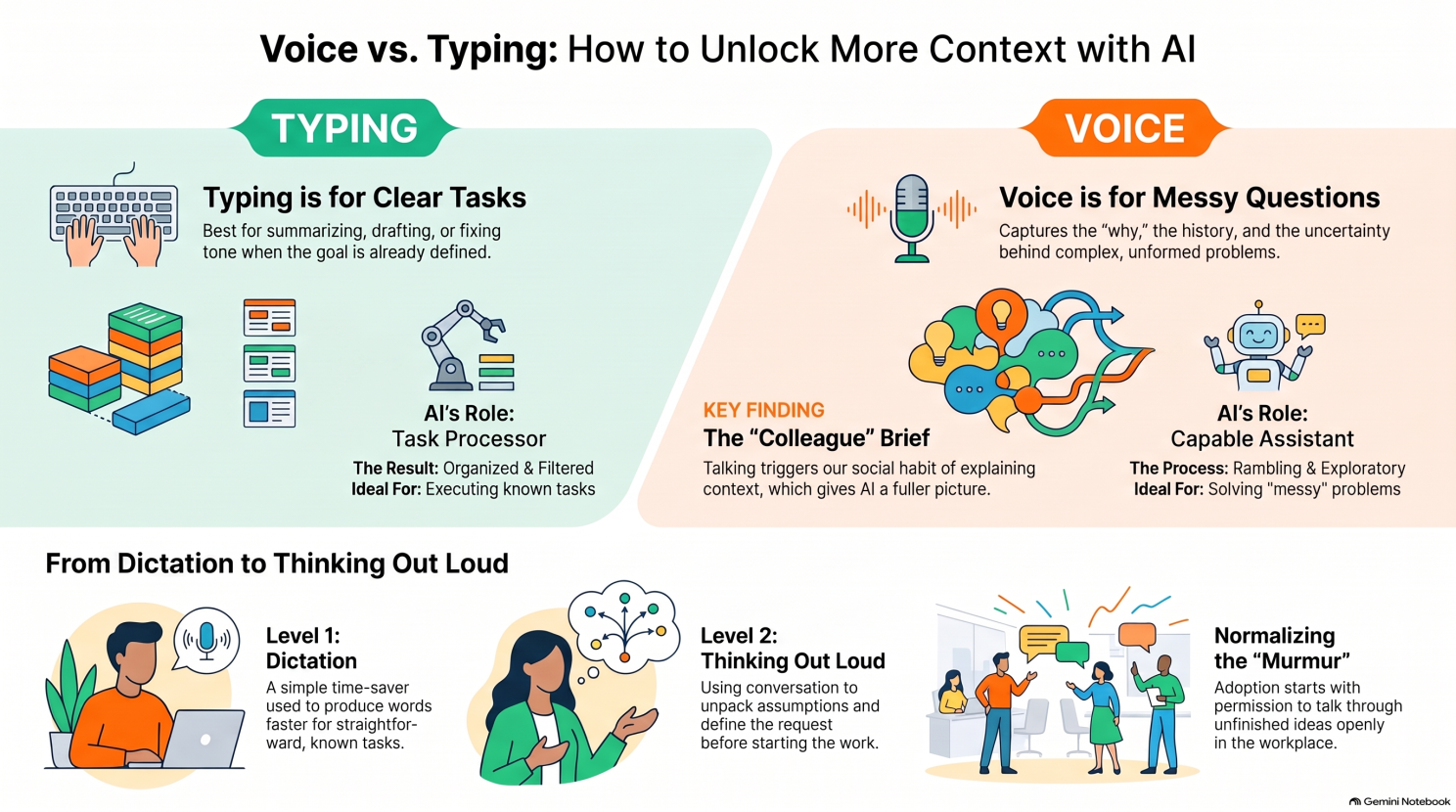
Typing is well suited to tasks that are already clear. Summarize this, draft that, fix the tone here. It encourages us to organize the thought before we share it, which is useful when we know exactly what we need. Voice gives us another way to approach the messier questions. What am I really trying to solve? Why does this keep happening? Talking makes it easier to include the background, uncertainty and competing considerations that help the AI respond well.
The better prompt is only part of it. The bigger shift is bringing AI in before the problem is fully defined. Instead of arriving with a finished request, people can use the conversation to figure out what the request should be. They can talk through a presentation before building the slides, unpack why a meeting didn't go as expected or test the assumptions behind a recommendation.
The person still owns the judgment. Voice makes it easier to make their reasoning visible, examine their assumptions and improve the result. There's an interesting tension worth naming. When I teach this, I make one distinction clear: AI doesn't think, understand or assign meaning the way a person does. People still need to review the output and apply their own judgment.
Then, in the next breath, I tell them to brief the AI like a colleague. Give it the background, the goal and the constraints, the way you would with someone you're handing an important assignment to. Both things are true at once. You don't have to believe the tool is a person to talk to it like one. The value comes from the habit. Years of explaining our thinking to other people have taught us how to lay out a problem so someone else can act on it.
That same skill produces better results from AI, and voice pulls it naturally to the surface because talking is how we already do this with each other. Voice also needs to become socially normal. Talking to a computer can still feel slightly strange, especially in an office. Bloomberg recently described voice dictation spreading from one employee murmuring to his laptop to other people across the company.
The same social dynamic applies to conversational AI. Once someone makes talking to a computer look normal, other people become more willing to try it. From there, voice can become more than a faster way to produce words. It can become a way to work through the problem itself. That's why voice adoption begins with permission. Someone has to go first and show that it's fine to talk through an unfinished idea and let the AI help create structure.
This is where I spend workshop time: helping people experience voice with something they already need to solve. As they talk through the problem, the interaction begins to feel natural and the value becomes clear. Teams often assume the next stage of AI adoption requires another tool, another course or a more sophisticated prompt library. Sometimes it starts with something much smaller.
Your people may already have access and be using the tool well. Voice gives them another way to bring their context, judgment and unfinished thinking into the interaction. Once talking to AI feels natural, they discover how useful it can be while the question is still taking shape. That's often where the more valuable use of AI begins.